

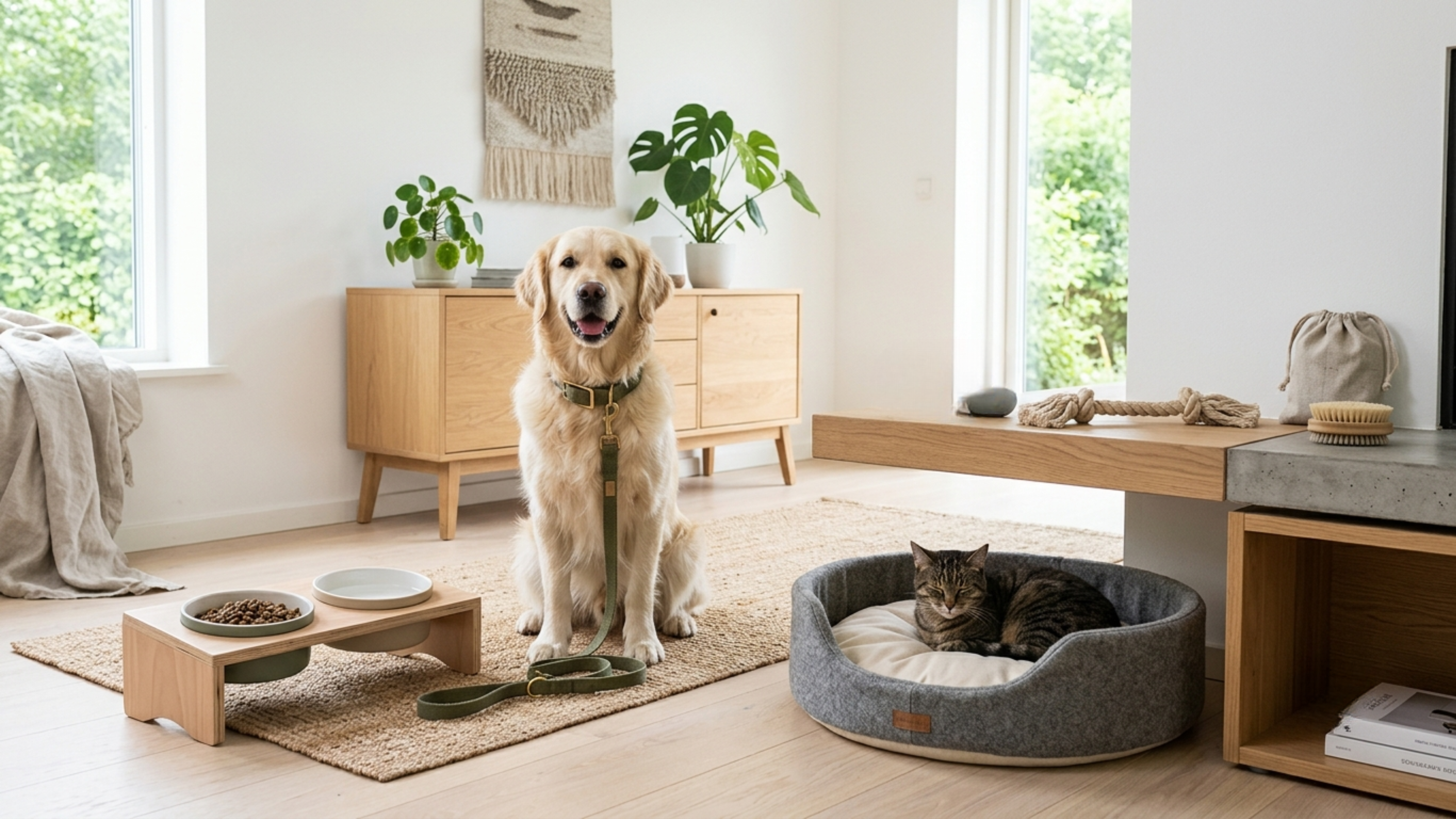
Sustainability in pet care generates more marketing language than it does useful guidance. "Eco-friendly," "natural," and "sustainable" appear on product packaging with varying degrees of accuracy. Sometimes describing a genuine material commitment, sometimes describing a single recycled component in an otherwise conventional product.
For Malaysian pet owners who approach sustainability with the same discernment they bring to other purchasing decisions, the question isn't whether a product claims to be eco-friendly. It's what the claim actually means, and whether the underlying material choices hold up.
Here's what genuine sustainability looks like in pet accessories, and which standards are worth paying attention to.
Why Material Choices Matter More Than Marketing
The pet accessories market produces a significant volume of short-lived products. Synthetic toys that shed microplastics, nylon webbing that ends up in landfill, polyester beds that need replacing every year. The environmental cost isn't dramatic in any single instance, but it compounds across the lifetime of a pet and across millions of households.
The more sustainable path is also the more considered one: choosing materials that are honestly sourced, production methods that are responsible, and products designed to last rather than be replaced. These criteria aren't in tension with quality or aesthetics. They tend to be the same criteria that produce the best-performing products.
Natural materials as a baseline
Natural materials, wool, organic cotton, leather, ceramic, stainless steel, are not automatically more sustainable than synthetic alternatives. But they tend to be more biodegradable, more repairable, and more durable in ways that reduce the replacement cycle. A wool felt toy that lasts three years has a lower lifetime environmental impact than a synthetic one replaced every six months, even if the synthetic one is technically made from recycled materials.
The key question to ask of any natural material claim: is it certified, and what does that certification actually cover? Uncertified "natural" claims are marketing language. Certified organic, certified recycled content, and certified responsible sourcing are verifiable claims that hold up to scrutiny.
Certified sustainability over marketing claims
Certification matters because it makes a claim verifiable. SEAQUAL yarn, for example, is a certified material made from ocean plastic and coastal waste, processed under independently audited standards. That's a meaningfully different claim from "contains recycled materials," which can describe anything from a genuinely circular production process to a small percentage of recycled filler in an otherwise conventional product.
Similarly, certified organic cotton means the cotton was grown without synthetic pesticides or fertilisers under third-party verification. Uncertified "natural cotton" may or may not reflect a different production standard. The certification is what makes the claim meaningful.
What to Actually Look for by Category
Beds and cushions
The most important sustainability credentials for a pet bed are material transparency, washability, and construction that supports longevity. A bed with a removable, machine-washable cover extends its usable life significantly. A cover material that specifies its certification, whether ocean-recycled yarn, organic cotton, or certified wool, is more trustworthy than one that uses generic "natural" language.
Foam fill is worth asking about specifically. Most conventional pet bed foam is polyurethane, which is not recyclable and off-gasses VOCs. Recycled foam fill, or natural latex, is a meaningfully different choice, particularly for a pet that spends significant time resting.
Enrichment and feeding
For consumables, the relevant certifications are organic, vegan, and food-grade material standards. Halal certification in the Malaysian context is also a consideration for owners who apply this standard to their own food purchasing.
For enrichment toys, material durability is the primary sustainability credential. A toy that lasts two years has a lower environmental footprint than one replaced every two months. New Zealand felted wool, for instance, is naturally heat-resistant and dirt-repellent. It maintains its form through sustained daily play in a way that synthetic alternatives don't.
For feeding accessories, food-grade silicone and stainless steel are the materials most worth prioritising. Both are durable, non-toxic, dishwasher-safe, and significantly longer-lived than plastic alternatives.
Walk accessories
Leather is a complex material from a sustainability perspective. Its production has environmental costs, but its longevity significantly reduces the replacement cycle compared to synthetic webbing. Vegetable-tanned leather, specifically, avoids the chromium compounds used in conventional chrome-tanning, producing a material that biodegrades more readily at end of life and carries a lower chemical processing footprint.
Nylon and polyester webbing, the materials in most mass-market leads and harnesses, shed microplastics with use and degrade rather than age. A leather lead used daily for eight years has a lower lifetime environmental impact than four nylon leads replaced across the same period.
What to Look for When Evaluating Sustainability Claims
Ask what the certification actually covers
A product certified as organic may have organic materials but a non-organic production process. A recycled content claim may describe a small percentage of one component. Understanding what a certification covers, and what it doesn't, is the basis for evaluating whether it's meaningful.
Consider longevity alongside material sourcing
A product made from certified sustainable materials that needs replacing every year may have a higher lifetime environmental impact than a conventional product that lasts five. Longevity and repairability are sustainability credentials as legitimate as material sourcing. The most sustainable pet accessory is almost always the one you don't have to replace.
Apply the replacement cycle test
The simplest heuristic: how often will this need replacing, and what happens to it when it does? A product that lasts five years and biodegrades at end of life is meaningfully different from one that lasts one year and goes to landfill. The maths consistently favours buying once and buying well.
A Note on Sustainability in the Malaysian Context
Malaysia's recycling infrastructure and waste management systems mean that end-of-life disposal of pet accessories is a less controlled process than in markets with more developed circular economy infrastructure. This makes the longevity argument for sustainable pet accessories more compelling, not less. A product that simply doesn't need replacing is a more reliable sustainability outcome than one that depends on disposal processes that may not function as intended.
Choosing well, once, for a long time. That's the most reliable path to sustainable pet ownership available to Malaysian consumers right now.
Browse the full collection at lumipets.com.my


