

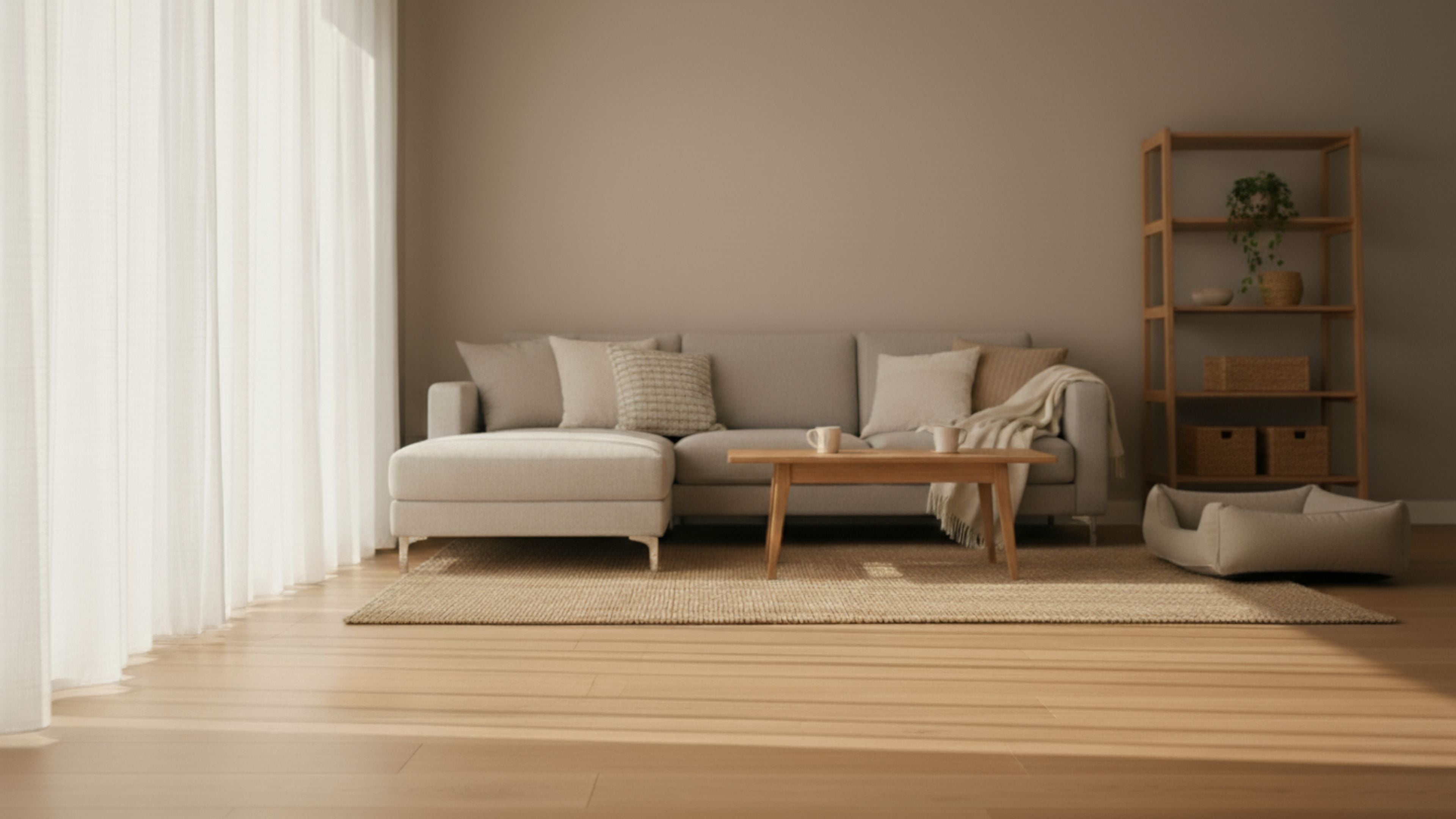
The idea that pet ownership means sacrificing your home's aesthetic is one of design's most persistent myths. In reality, welcoming a companion animal into your space offers an opportunity to create an environment that honors both beautiful design and your pet's wellbeing. For those drawn to minimalist living, this integration reveals something profound: pets and minimalism don't just coexist—they naturally enhance one another.
Why Pets and Minimalist Living Belong Together
At its heart, minimalism isn't about owning as little as possible. It's about intentionality, keeping only what serves a genuine purpose and brings value to your life. When you observe your pet closely, you'll notice they're natural minimalists. Your dog returns repeatedly to one favorite sleeping spot rather than needing multiple beds. Your cat plays with two beloved toys while the rest gather dust. Animals operate on genuine need, not accumulation.
This alignment goes deeper than similar behaviors. Pets actually thrive in streamlined environments. A cluttered space with items everywhere creates sensory overload for animals with heightened senses. In contrast, a minimalist home with clearly defined zones for eating, sleeping, and play provides structure and calm. When your pet knows exactly where their essentials are located, they feel secure and confident, which reduces anxiety and creates more peaceful behavior.
Minimalist living also encourages mindfulness about what enters your home. This discernment becomes invaluable when selecting pet essentials. Rather than accumulating mass-produced items that clutter your space, you choose fewer pieces of superior quality—objects designed to endure, function beautifully, and complement your aesthetic vision.
Designing a Pet-Friendly Home That Reflects Your Style
The key to harmonizing pet care with design lies in treating pet essentials as integral elements of your interior, not afterthoughts to hide away. When thoughtfully designed, these items deserve the same consideration as any other furnishing.
Embrace a Cohesive Color Palette
Begin by extending your existing color story to your pet's belongings. If your space celebrates neutral tones—warm beiges, soft greys, natural whites—seek pet essentials that honor this palette. A linen pet bed in undyed fabric or ceramic feeding bowls in matte stone complement rather than disrupt your aesthetic. When pet items blend with your color scheme, your eye processes them as part of the room's composition rather than visual interruptions. This creates the continuity that makes spaces feel cohesive and calm.
Prioritize Material Quality and Texture
Minimalism finds beauty in natural materials and honest construction. Apply this principle by selecting items crafted from wood, natural fibers, ceramic, and sustainably sourced textiles. These materials align with minimalist aesthetics while offering superior durability and comfort. A woven rattan cat house or hand-stitched leather collar brings the same material integrity you expect from your own furnishings. Natural materials also regulate temperature better and feel more comfortable for your pet, serving both your design sensibilities and their genuine comfort.
Create Dedicated, Thoughtfully Designed Zones
Instead of letting pet items scatter throughout your home, establish specific zones for specific activities. This serves dual purposes: it provides your pet with consistent spaces they understand, while maintaining the clean lines essential to minimalist design. Your feeding station might occupy a kitchen corner with elevated bowls on a simple wooden stand. A sleeping area could be a quiet bedroom nook with a beautifully appointed bed. Consider containing toys in one elegant storage solution—a woven basket or wooden box—that keeps them accessible but contained when not in use.
This zoning approach creates clean surfaces throughout your home while giving your pet clear understanding of their space. You maintain uncluttered aesthetics while meeting all their needs.
Select Multi-Functional and Timeless Pieces
Every item should either serve multiple functions or have such timeless design that it remains relevant for years. A storage ottoman that conceals toys while providing seating serves two functions in one footprint. A pet bed with clean, classic lines transitions seamlessly between rooms as needed and won't feel dated as trends shift. When evaluating purchases, ask: Will I find this beautiful in five years? Can it adapt as my needs change? These questions guide you toward lasting choices that embody both minimalist principles and smart economics.

How Minimalism Enhances Your Home's Beauty and Your Pet's Happiness
The transformation that unfolds when minimalist principles meet pet care extends beyond aesthetics into tangible quality-of-life improvements for both you and your companion.
Safety and Confidence for Your Pet
Reduced clutter means safer navigation through your home—fewer obstacles to trip over, clearer pathways, and less risk of injury. This matters especially for young pets still learning spatial awareness and senior pets whose mobility may be declining. Beyond physical safety, there's emotional security. When everything has a consistent place, your pet develops confidence about their environment. This predictability reduces anxiety, which manifests in calmer, more settled behavior.
Beauty and Calm for You
Your home remains a true sanctuary because it reflects your values and aesthetic vision completely. There's no corner where you've compromised on design because "that's just where the pet stuff goes." This matters more than you might think. Our environments significantly impact our mental state and stress levels. When caring for your pet happens within a context of beauty rather than despite it, daily tasks like refreshing water bowls become small moments of grace rather than chores that disrupt your carefully designed space.
Deeper Connection Between You and Your Companion
Something interesting happens when you simplify your environment: you naturally become more present. With fewer possessions demanding attention and less visual noise competing for focus, you have more capacity for what truly matters—genuine companionship with the animal who shares your days. The simplified environment removes barriers to connection, creating space for the relationship that led you to get a pet in the first place.
The Art of Mindful Consumption: Buying Less, Choosing Better
Perhaps minimalism's greatest gift to pet ownership lies in its invitation to resist the relentless marketplace promising that more products equal better care. Before acquiring any pet item, consider three essential questions: Does this genuinely serve my pet's needs? Will it maintain its beauty and function over time? Does it align with the aesthetic and values I'm cultivating?
The True Economics of Quality
This framework naturally leads toward investment pieces with higher initial costs but exponentially greater lifetime value. Consider a pet bed: a mass-market option might cost RM 180 but need replacement every six months as filling compresses and fabric deteriorates. Over five years, you've spent RM 900 and contributed multiple beds to landfills. An exceptionally crafted bed at RM 800—made from organic materials with reinforced construction—maintains its comfort for five to seven years. You've spent RM 800 once, saved money, eliminated waste, and provided better support for your pet's wellbeing throughout.
The calculation extends beyond economics. Quality pieces eliminate the cycle of researching, purchasing, and replacing items that wear quickly or fail to meet your standards. A single exceptional piece serves indefinitely while looking beautiful every day.
Choosing Makers Who Share Your Values
Seek companies and curators who demonstrate genuine commitment to thoughtful design, quality materials, and responsible production. These businesses practice transparency about where materials come from and how products are made. When you find such makers, you develop trust that simplifies future decisions. You're working with curators whose judgment aligns with yours rather than sorting through thousands of mass-market options of varying quality.

Transform Your Space, Elevate Your Companion's Life
The intersection of minimalism and pet ownership offers something rare: a path toward greater beauty that simultaneously enhances wellbeing. By applying minimalist principles to how we care for our companions, we create environments that nurture both human and animal with intention and purpose.
This transformation needn't happen all at once. Begin with one corner of your home—perhaps where your pet eats or sleeps. Remove everything, clean the space completely, then thoughtfully replace only essentials. Notice what you've been tolerating rather than loving. Do the bowls match your aesthetic or clash with it? Is the bed quality worth keeping or a candidate for eventual replacement?
You'll likely observe changes quickly. The simplified corner looks calmer and more intentional. More importantly, watch your pet's response. They'll probably gravitate toward the organized area because animals respond positively to order and cleanliness. These small shifts confirm you're improving more than aesthetics—you're enhancing their quality of life.
One successful transformation creates momentum. You'll start seeing the rest of your home differently, noticing where thoughtful integration could replace clutter. This ripple effect becomes self-sustaining because you're motivated by visible results.
Your pet deserves products that honor their comfort and wellbeing. Your home deserves to remain a reflection of your refined sensibilities. Minimalism reveals these desires aren't competing—they're complementary, each enhancing the other when approached with intention and care.


