


INSPIRATIONS
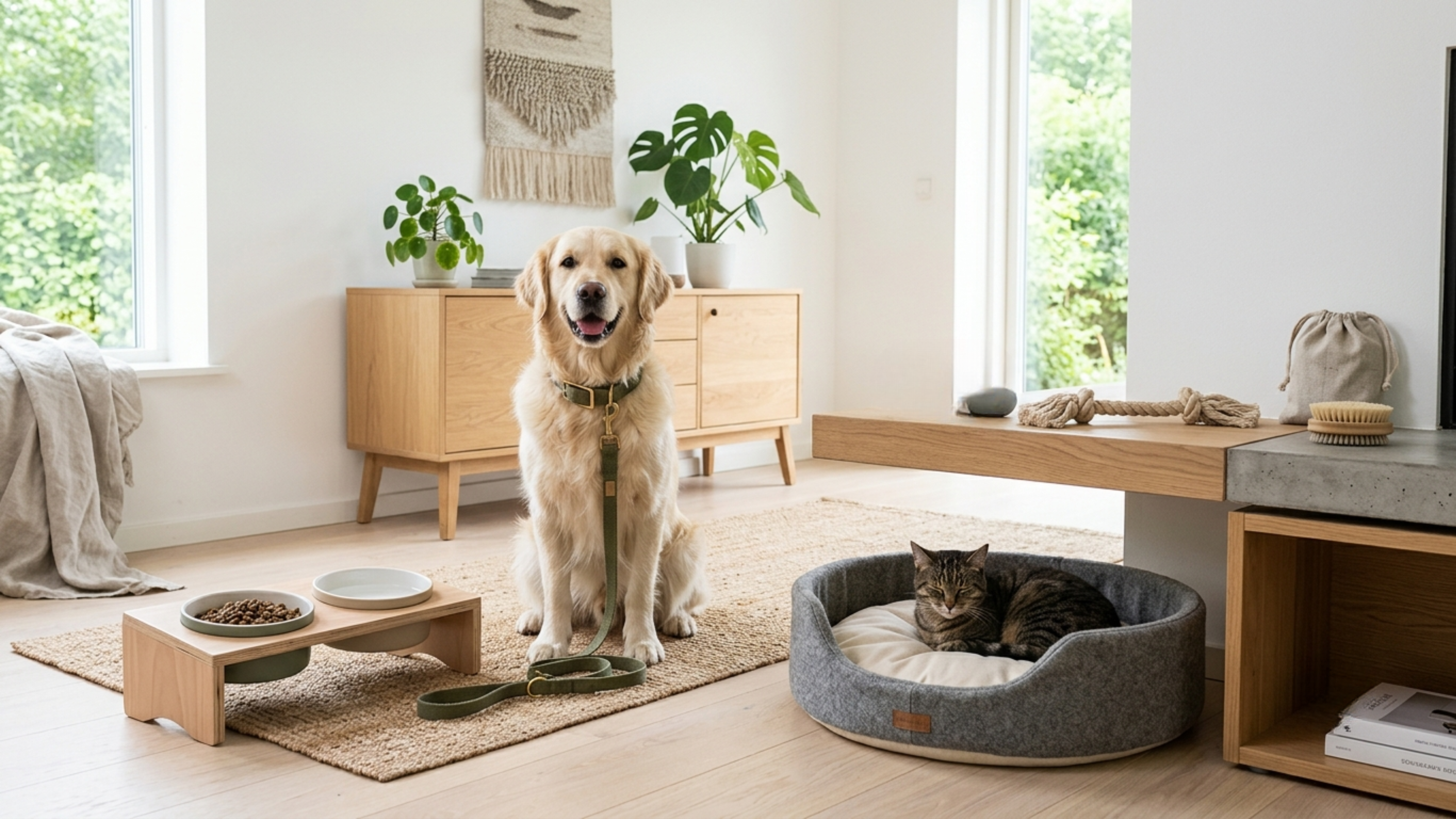

THE BEST PET ACCESSORIES FOR SMALL APARTMENTS IN KL
Living with a dog or cat in a Kuala Lumpur apartment presents a particular set of constraints that most pet product advice doesn't account for. The assumptions built into mainstream pet content don't apply to a 900 square foot unit in Mont Kiara or a two-bedroom in Bangsar South. No garden for the dog. No spare room for a cat tree. Floor space that's already fully occupied. The result is that urban Malaysian pet owners often end up with accessories designed for conditions they don't have, or compromise on their pet's quality of life because the alternatives they've found are too large, too visually dominant, or too impractical for a smaller space. Neither outcome is necessary. Here's how to approach pet accessories specifically for apartment living in KL. The Core Challenge: Space That Has to Work Harder In a smaller apartment, every object occupies a larger proportional share of the visual field. A bulky pet bed that would disappear in a landed house becomes a centrepiece in a studio. A toy collection that spreads across a living room floor works fine with abundant space but creates genuine friction in a compact one. The accessories worth choosing for apartment living share a set of qualities: they do their job fully without occupying more space than necessary, they integrate visually rather than demanding attention, and they're easy to move or store when the space needs to serve another purpose. Dual-purpose over single-use In a smaller home, accessories that serve more than one function earn their place more readily than those that do a single thing. A storage basket that keeps toys contained while reading as a considered design object occupies the same floor space as a plastic toy bin but contributes to the room rather than subtracting from it. The same logic applies to feeding and enrichment. A puzzle toy that doubles as a slow feeder is one item instead of two. A lick mat that works with both wet food and spreadable covers more daily use cases without requiring a second piece. When floor space is limited, accessories that consolidate functions are worth prioritizing. Vertical space as an opportunity Cats benefit from vertical enrichment. Climbing, perching, and observing from height are natural behaviours that don't require floor space. In an apartment where floor area is at a premium, a well-chosen elevated perch or cave that tucks into a corner provides genuine enrichment without the footprint of a traditional cat tree. For dogs, vertical space matters less, but wall-mounted hooks for leads and collars near the entry point keep the walk kit organized without occupying floor or surface area. Walk Accessories for Urban Dogs Dogs in KL apartments tend to walk more frequently than dogs in landed properties. Shorter, more regular outings replace the sustained outdoor time that a garden provides. This makes the walk kit more important, not less, and worth choosing with more care. Harness versus collar in an urban environment KL's urban environment calls for a harness that provides secure control without restricting movement. Covered walkways, wet pavement, sudden rain, and busy intersections all create conditions where a dog that pulls or startles unexpectedly needs to be held securely without the neck strain that a collar attachment produces. A well-fitted harness with front and back attachment points gives more directional control in dense areas without requiring constant correction. For dogs being trained on lead, this matters practically, not just aesthetically. The case for hands-free walking In a busier urban environment, hands-free walking has more practical value than it does in quieter suburban settings. A hands-free lead that converts between cross-body and waist-worn keeps hands free without sacrificing control. For KL apartment dwellers who walk during morning and evening peaks, when pavements are busier and navigation requires more attention, it's a meaningful quality-of-life shift. Enrichment Without the Footprint Mental enrichment matters more for apartment dogs, not less. A dog without garden access and with limited space for sustained physical play needs more cognitive engagement to stay settled and balanced. The good news is that the best enrichment accessories are also among the most compact. Lick mats and puzzle feeders A lick mat takes up less space than a dinner plate and provides sustained enrichment. Used before a period of alone time, or as part of a morning routine, it produces a calm, focused dog in a way that a walk of the same duration often doesn't. This is because licking activates the parasympathetic nervous system, producing a physiological calming effect that physical exercise alone doesn't replicate. Puzzle feeders work in a similar way. A dog that has to work for its meal engages problem-solving behaviour that tires the brain more effectively than the body. In an apartment context, this is one of the most space-efficient forms of enrichment available. Snuffle toys over large play equipment Toys designed for nosework provide high-value enrichment in a compact form. They can be used in the living room, the bedroom, or the corridor of an apartment without requiring floor space to be cleared. A dog working a snuffle toy for twenty minutes is a dog that settles easily afterward. That matters in an apartment where settled behaviour has a more direct effect on everyone's quality of life. When choosing enrichment toys for an apartment, prioritise compact designs over large plush toys, toys with multiple sensory elements over single-stimulus ones, and designs that can be stored flat or in a basket when not in use. Feeding Accessories for a Smaller Kitchen In an apartment kitchen, the feeding station is visible from much of the living space. The bowl, the mat, and any associated accessories are part of the room's visual field in a way they wouldn't be if tucked into a corner of a larger home. A non-slip bowl eliminates the need for a separate mat, reducing the number of items at the feeding station. Food-grade silicone is worth considering over ceramic for apartment floors because it won't chip if knocked, won't slide, and resists the limescale buildup that is a consistent maintenance issue in KL's water conditions. Keeping the feeding station to two items, a food bowl and a water bowl, and choosing them in a tone that works with the floor or wall behind them, is usually enough to make the station feel considered rather than accumulated. The Principle for Apartment Pet Owners The best pet accessories for a small KL apartment are the ones you'd choose anyway if you were applying the same standard to everything else in your home. Well made, proportionate, visually coherent, and capable of earning their space rather than merely occupying it. Less, but chosen more carefully. That's the principle, and it applies more directly in a smaller space than anywhere else. Browse the full collection at lumipets.com.my
Learn more
EVERYTHING A NEW DOG OWNER ACTUALLY NEEDS — AND WHAT THEY DON'T
The week before a dog comes home tends to produce a particular kind of shopping behaviour. Driven by a mixture of excitement and uncertainty, new owners buy more than they need, most of it before they understand what their specific dog actually requires. The result is a collection of items — some useful, some redundant, some that turn out to be the wrong size, material, or type for the animal that eventually arrives. This guide takes a different approach. Here's what a new dog owner in Malaysia genuinely needs, why each piece matters, and what's worth deferring until you know your dog better. The Foundation: What Every Dog Needs From Day One A well-fitted collar with ID A collar serves two purposes: it carries your dog's ID tag, and it provides a secondary attachment point for a lead. For a new dog — especially one still adjusting to its environment — a well-fitted collar that can't be slipped is the single most important piece of equipment you own. It should sit two fingers below the jawline, allow two fingers of clearance between collar and neck, and be made of a material that won't irritate the skin during the adjustment period. The Touch of Leather collar from Molly & Stitch is handcrafted in Austria from supple leather that softens against a dog's coat rather than stiffening with wear. At RM 270, it's a meaningful investment — one that outlasts multiple synthetic replacements and holds its form through years of daily use. A harness for walks A harness distributes pressure across the chest and shoulders rather than the neck — which matters for puppies whose tracheas are still developing, for dogs that pull during leash training, and for any dog being walked in a busy environment where sudden stops are common. It's worth buying from the start rather than transitioning from collar to harness later, as dogs adapt more readily to a harness introduced early. The ST Argo harness is adjustable at the chest and designed to accommodate a range of builds — useful when you're still learning your dog's proportions, or if you're adopting an adult dog whose ideal fit you're still establishing. A leash you'll want to hold A leash is in your hand twice a day, every day, for the life of your dog. It's worth choosing carefully. Leather leashes — like the Molly & Stitch Butter Leather or Touch of Leather range — soften over time, hold up through Malaysia's humidity without stiffening, and feel genuinely different from synthetic webbing within the first walk. The 120cm length is suited to most urban walking environments: long enough for a relaxed walk, short enough for control in a busy area. A high quality bed in premium material A dog's bed is where it spends a significant portion of its life. The material matters more than most owners initially expect — not just for comfort, but for temperature regulation in Malaysia's climate. A bed that keeps a dog cool in an air-conditioned apartment and comfortable in a warmer environment contributes meaningfully to how well a dog sleeps — and by extension, how settled it is during the day. The MiaCara Mare Dog Cushion features a cover woven from SEAQUAL yarn — recycled ocean plastic processed into a breathable, durable fabric — with a recycled foam interior that maintains its shape through years of daily use. The pre-formed hollow cradles the spine; the raised outer edge provides a headrest. It's the kind of bed worth buying once. The Next Layer: What to Add in the First Month An enrichment toy Dogs need mental stimulation as much as physical exercise — and a dog settling into a new environment particularly benefits from activities that focus its attention and channel its energy constructively. A moderate-difficulty puzzle toy, introduced in the first week, helps a dog learn that working for a reward is a normal and satisfying part of its day. The Lambwolf Collective Fromage is a useful starting point: treat pockets at moderate difficulty, triple-layer reinforced fabric, and a design that rewards persistence without frustrating a dog that's new to the concept. A slow feeder or lick mat Eating too quickly is common in new dogs — anxiety, excitement, and the unfamiliarity of a new routine can all accelerate eating speed. A slow feeder or lick mat addresses this practically while also providing a form of enrichment that calms and regulates. The Lunoji Twirl Lick Mat's dual-sided design works with wet food on one side and spreadable treats on the other — a versatile daily tool that earns its place in the routine quickly. A poop bag holder Simple, functional, and easy to forget until you need it. The ST Argo poop bag holder clips directly to the leash with a magnetic snap closure — it opens smoothly, stays fastened, and keeps a roll of bags accessible without requiring you to carry anything separately. It's the kind of small thing that makes the walk measurably less complicated. What to Wait On Clothing and accessories Dog clothing — coats, sweaters, seasonal items — is best purchased once you understand your dog's tolerance for it. Some dogs adapt readily; others find it stressful. Buying a wardrobe before you know which category your dog falls into is likely to result in unused items. Multiples of anything New owners tend to buy in quantity before understanding what works. One bed, one set of bowls, one walk kit — assessed carefully and replaced with intention once you understand your dog's preferences — will serve better than multiples of everything purchased at once. Your dog will tell you what matters to it. Pay attention. Anything that requires your dog's input to size correctly Some accessories — harness fit, collar sizing, bed dimensions — are best finalised once you have the animal in front of you. If you're adopting, ask the shelter for measurements. If you're collecting from a breeder, ask them to weigh the dog close to collection date. Sizing from a photograph tends to produce more returns than it prevents. The Principle Behind a Considered Setup A new dog's life doesn't need to be elaborate. It needs to be intentional — built around what the animal actually requires rather than what the market makes easily available. The owners who do this well tend to own less, spend more carefully, and live with fewer items that don't pull their weight. Start with what's essential. Learn your dog. Add from there. Build your dog's setup at lumipets.com.my
Learn more
THE CONSIDERED PET OWNER'S GIFT GUIDE: PREMIUM ACCESSORIES WORTH GIVING
Buying a gift for a pet owner is harder than it looks. The obvious choices is a novelty toy, a generic treat set, a branded pet bandana tend to communicate effort without demonstrating thought. And for pet owners who are particular about what they buy for their animals, a gift that doesn't meet their standard quietly creates a problem: they now own something they didn't choose and wouldn't have chosen. The gifts worth giving are the ones that feel like a genuine upgrade, things the recipient might have considered buying for themselves but hadn't yet. Here's how to find them. The Principle Behind a Good Pet Gift A considered pet gift does one of two things: it fills a gap in the recipient's setup that they've lived with but not yet addressed, or it introduces them to a standard of quality they didn't know existed. Both require knowing something about how the person thinks about their pet's life, which is why the best pet gifts tend to come from people who are paying attention. Avoid the novelty trap Novelty pet gifts items that are amusing rather than useful, cute rather than considered, tend to have a short life in a household. They're used once, appreciated briefly, and then stored or discarded. For pet owners who approach their animal's wellbeing thoughtfully, a novelty gift can feel like a misread, rather a signal that the giver doesn't quite understand how seriously they take this. The alternative isn't necessarily more expensive. It's more intentional. A beautifully made treat pouch, a well-designed lick mat, a collar in a quality material. These are gifts that enter the recipient's daily routine and stay there. Match the gift to the pet's life stage A puppy's needs are different from a senior dog's. A cat that lives entirely indoors needs different enrichment than one with garden access. A dog in a KL apartment has different daily rhythms than one in a landed house in Subang. The more specific the gift to the actual life the pet is living, the more considered it reads. Gifts by Category For the dog owner who walks daily The walk kit is where most dog owners have the clearest gap between what they have and what they'd choose if they were buying intentionally. A leather leash from Molly & Stitch: handcrafted in Austria, 120cm, with solid steel hardware, is the kind of upgrade that transforms something a person does twice a day. Pair it with the ST Argo poop bag holder in a matching colourway and you have a gift set that looks considered and functions better than anything the recipient likely already owns. For dog owners who run or hike with their dogs, the ST Argo hands-free lead is the gift that prompts the most immediate adoption. Once someone has used a hands-free lead that converts between cross-body and waist-worn, the idea of holding a leash on a run feels genuinely inconvenient. For the enrichment-minded pet owner Enrichment toys are increasingly understood as a serious investment in a pet's mental health, not just entertainment, but a daily tool for managing anxiety, boredom, and the cognitive decline that comes with aging. For a dog owner who already understands this, a higher-difficulty puzzle toy is a natural progression from whatever they're currently using. The Lambwolf Collective Pea Pop: three squeaky TPR balls hidden inside a plush pod is designed for dogs that have outgrown beginner enrichment toys. The Lunoji Pebble puzzle toy doubles as a slow feeder and treat dispenser, making it a versatile daily use piece rather than an occasional toy. Both are the kind of gift that demonstrates genuine knowledge of what the recipient is interested in. For the cat owner with an eye for interiors Cat furniture has historically been one of the hardest categories to gift well — most options are either too large to be practical or too visually dominant to sit comfortably in a considered home. The MiaCara Loggia Cat Cave resolves both problems: its sculptural wool felt form reads as a design object as much as a cat bed, and its proportions are suited to apartment living. For a more accessible gift, the MiaCara Bosco Cat Toy, a handcrafted wool felt with a refillable catnip pouch. It is beautifully made in a way that's immediately apparent, and small enough to be an add-on gift rather than a centrepiece. For the new pet owner Someone who has recently welcomed a dog or cat into their home is in the process of building their entire setup, which means almost everything is a relevant gift. The most useful approach is to identify the one piece they've likely defaulted on rather than chosen carefully. For a new dog owner, this is almost always the walk kit. For a new cat owner, it's often enrichment. Cats in new homes benefit enormously from toys that engage their natural instincts while they're adjusting. A Lumi Pets gift card is also genuinely useful here. It allows a new pet owner to choose pieces as they understand their animal's needs better, rather than receiving something specific that may not fit the situation. Find the right gift at lumipets.com.my — digital gift cards available from RM 100
Learn more
WHAT TO LOOK FOR IN PREMIUM PET ACCESSORIES THAT LAST
The most expensive thing you can buy for your pet is something cheap that needs replacing every six months. A RM 35 collar that frays. A RM 50 bed that flattens after three washes. A RM 25 leash that stiffens in the humidity and snaps a clip within a year. Multiplied across a dog's lifetime — twelve, thirteen, fourteen years — the cost of replacing low-quality pet accessories consistently outpaces the upfront investment in something better. This isn't an argument for spending more. It's an argument for spending once. Why Most Pet Accessories Fail Early The pet accessories market is large, competitive, and heavily price-driven. The result is a category dominated by products designed to sell at a price point rather than to last at a quality standard. Understanding where corners are typically cut helps you identify the pieces worth trusting. Where quality is usually compromised Hardware is the first place to look. Zinc alloy clips and rings corrode quickly in Malaysia's humidity — within months of regular outdoor use, they develop surface rust that weakens the connection and transfers to your dog's coat. Solid brass or stainless steel hardware costs more to produce but doesn't corrode, doesn't weaken, and doesn't need replacing. Stitching is the second. Mass-produced accessories are typically assembled at speed, with thread counts and seam reinforcement that are adequate for initial use but not for the kind of sustained stress that daily wear puts on a leash clip or collar buckle. Triple-layer reinforced stitching at stress points — where the clip meets the leash, where the buckle meets the collar — is what separates a piece built to last from one built to sell. Materials are the third. Synthetic webbing, polyester fill, and plastic hardware are all chosen for cost, not performance. They're not necessarily poor materials in every context — but in a climate like Malaysia's, where humidity, heat, and sudden rain are daily realities, natural materials and quality synthetics outperform cheap alternatives measurably. What Premium Actually Means in Pet Accessories The word "premium" is used loosely in the pet industry — attached to products that are expensive without being particularly well made. Here's what it should actually mean. Material integrity Premium materials are honest about what they are and perform consistently over time. Austrian vegetable-tanned leather — the material in the Molly & Stitch Butter Leather range — is processed without synthetic chemicals, softens with use rather than stiffening, and develops a patina that cheap leather substitutes never achieve. New Zealand felted wool — used in the MiaCara Globo dog toy ball — is heat-resistant, naturally dirt-repellent, and maintains its shape through sustained play in a way that tennis ball felt degrades within weeks. These aren't marketing claims. They're the natural properties of materials chosen for their performance, not their price. Construction that anticipates daily use A well-made pet accessory is designed with the understanding that it will be used every day, in conditions its designer has thought carefully about. The ST Argo harness, for example, is adjustable at the chest specifically to accommodate dogs across different builds — not as a convenience feature, but because a harness that doesn't fit correctly creates pressure points that affect a dog's gait and comfort over time. That kind of considered construction is the difference between a product designed for the shelf and one designed for actual use. Longevity as a design principle The MiaCara Loggia Cat Cave uses premium wool felt with substantial wool content specifically because felt can be replaced when worn — meaning the structural piece lasts while the surface material can be renewed. That's a design decision that assumes a product will be used for years, not months. It's a fundamentally different approach to manufacturing than producing something intended to be replaced. How to Evaluate Pet Accessories Before You Buy Check the hardware first Turn the piece over and look at the clips, rings, and buckles. If the hardware looks lightweight or has a shiny, uniform finish that suggests a cheap plating, it's likely zinc alloy. Solid brass and stainless steel have a weightier feel and a less uniform appearance. Swivel clips that move smoothly under pressure are a good sign — stiff or loose clips suggest a lower quality casting. Read the materials honestly "Vegan leather" can mean anything from high-quality PU with a durable finish to thin polyurethane that peels within months. Ask what the base material is. "Genuine leather" should specify the tanning process and origin where possible — naturally tanned leather behaves very differently from chrome-tanned leather in terms of longevity and feel. "Organic cotton" is meaningful if it's certified; it's a marketing claim if it isn't. Think about your specific environment Malaysian pet owners face conditions that European or American buyers don't — consistent heat and humidity, frequent rain, outdoor environments that are wetter and muddier than temperate climates. A leather leash that performs well in Vienna needs to be evaluated for how it holds up in KL. Generally: natural materials with appropriate finishing, stainless or solid brass hardware, and machine-washable covers on beds and cushions are the specifications worth prioritising in this climate. The Calculus of Buying Once A RM 380 leather collar, maintained properly, lasts five to seven years. Three replacements of a RM 80 synthetic collar over the same period cost RM 240 — and require three purchasing decisions, three periods of adjustment for your dog, and three items eventually in landfill. The calculus rarely favours the cheaper option when the full lifetime is considered. This is the thinking behind how Lumi Pets curates its range. Every brand we carry has been selected on the basis of material quality, construction standards, and a track record of lasting — not on price point or visual appeal alone. The goal is a collection where buying once is genuinely possible. Browse the full collection at lumipets.com.my
Learn more
PET ACCESSORIES THAT ACTUALLY BELONG IN YOUR HOME
There's a moment most pet owners know well. You bring home a bed, a bowl, or a leash — and then spend the next few months quietly tolerating how it looks in your living space. The bright orange harness draped over the chair. The plastic food bowl wedged between the kitchen cabinet and the wall. The toy pile that somehow always ends up visible from the front door. It doesn't have to be this way. The gap between what's good for your pet and what looks considered in your home has narrowed considerably — if you know what to look for. Why Pet Accessories Have Traditionally Clashed With Interiors The pet industry has historically designed for impulse and price point, not for longevity or aesthetic integration. Bright colours signal playfulness at the point of sale. Plastic signals affordability. The result is a category of products that works well enough functionally but sits awkwardly in any home that its owner has thought carefully about. The assumption that pet owners will compromise For a long time, the industry operated on the assumption that pet owners would accept a visual trade-off — that choosing what's good for their animal meant accepting something that looked like it came from a pet store. This assumption is increasingly wrong. Design-conscious pet owners in Malaysia are choosing differently, and the international brands responding to that shift are producing products that belong in a considered home as naturally as any other well-made object. What "belonging" actually means A piece belongs in a home when it doesn't draw attention to itself for the wrong reasons — when it sits quietly in a space, serves its purpose, and neither clashes with what surrounds it nor demands to be hidden. In 2026, pet accessories are aligning with interior design trends rather than fighting them — pet parents don't want to hide their dog bowls anymore, they want them to belong. This is a different standard than matching, which is both harder to achieve and less interesting. Belonging means coherence — materials, tones, and proportions that feel like they were chosen rather than defaulted to. What to Look for in Pet Accessories That Integrate Well Materials that read as considered Natural materials — wool felt, leather, organic cotton, food-grade silicone, stainless steel — carry an inherent visual weight that synthetic alternatives don't. They age differently too: a leather collar softens and develops character over years of wear, while a nylon one frays and dulls. In a home with linen curtains and timber furniture, a wool pet bed reads as a deliberate choice. A polyester one reads as an afterthought. The MiaCara Mondo Dog Cushion in bouclé fabric is a useful example. Bouclé is a material that appears in high-end sofas and accent chairs — it belongs in a living room not because it's trying to match anything, but because its texture and warmth are consistent with how a considered interior feels. Colourways that work with neutral interiors Pet accessories are increasingly moving into soft off-whites, warm neutrals, and muted palettes that feel like a blank canvas rather than a statement — chosen the same way interiors and clothing are, for how they make a space feel. For Malaysian interiors that tend toward warm wood tones, terrazzo, and linen — the sand, taupe, and charcoal colourways that run through Lumi Pets' curated range sit naturally without requiring a redesign. Proportions that don't dominate A pet bed that takes up a third of a living room floor isn't inherently a problem — but its visual weight should be proportional to its surroundings. Low-profile beds, bowls that sit flush with the floor rather than spilling across it, and leashes hung rather than coiled tend to read as more considered. Think about how the piece will look in the room before you think about how it will look on the product page. Accessories Worth Integrating Room by Room The living room The pet bed and the toy collection are the two biggest visual considerations in a shared living space. A bed in a natural material — the MiaCara Mare cushion in ocean-recycled yarn, or the Tadazhi storage basket keeping toys contained — earns its place in the room rather than apologising for it. The goal is one or two pieces that look deliberate, not a collection of items that accumulates over time. The entryway The walk kit — leash, collar, poop bag holder — tends to live near the front door, which means it's often the first pet-related thing guests notice. Hanging a leather leash on a hook rather than leaving a nylon one coiled on the floor is a small shift that changes how the whole entry reads. The Molly & Stitch leather leash and Touch of Leather collar look as considered hung on a wall as they do in use. The kitchen Feeding accessories have moved away from being tucked out of sight between meals. Ceramic bowls, sculptural forms, and calm finishes are designed to live out in the home — sitting comfortably in kitchens and living spaces rather than being hidden. The Tadazhi silicone bowl in warm grey sits on a kitchen floor the way a well-chosen kitchen object sits on a counter — present without demanding attention. The Principle Behind It All Choosing pet accessories that belong in your home isn't about matching colours or following a style guide. It's about applying the same standard you already apply to everything else you bring into your space — asking whether something is well made, whether its materials are honest, whether it will look better or worse in a year's time. That standard, applied consistently, produces a home where your pet's things feel like a natural extension of how you live — not a concession you've made to accommodate an animal. Browse the full collection at lumipets.com.my
Learn more
THE SCIENCE OF PLAY: WHAT INTERACTIVE DOG TOYS ACTUALLY DO FOR YOUR DOG'S BRAIN
Most dog owners think of toys as entertainment. Something to keep a dog occupied, buy a little quiet time, maybe survive a rainy afternoon in a KL apartment. The toy gets chewed, squeaked, and eventually forgotten in a corner. But enrichment research tells a different story. Interactive dog toys — the kind designed to make a dog think, sniff, problem-solve, and work for a reward — do something measurably different from a rubber ball or a rope. Understanding what's actually happening when your dog engages with a well-designed toy changes how you choose them. Here's the science, and what it means for your dog. What a Dog's Brain Actually Needs Dogs are not domesticated wolves, but they carry the same fundamental drives: to sniff, track, forage, and problem-solve. These aren't optional extras — they're core to how a dog experiences the world and regulates its own emotional state. The role of the seeking system Neuroscientist Jaak Panksepp's research on animal behaviour identified what he called the "seeking system" — a primary emotional circuit that drives mammals to explore, investigate, and anticipate reward. In dogs, this system is activated by sniffing, searching, and working toward a goal. It's associated with dopamine release and produces a state of engaged, purposeful calm — not the frantic excitement of chasing, but something quieter and more sustained. This is why a dog that has spent 20 minutes working a puzzle feeder often settles more easily afterward than one that has spent 20 minutes running. Physical exercise tires the body. Mental engagement satisfies the brain. What happens without it Occupational and sensory needs are the most commonly overlooked aspects of pet enrichment. Physical exercise, social interaction, and nutrition tend to be well managed by most owners. But a dog left without meaningful mental challenges tends to create its own — through destructive behaviour, excessive barking, or anxiety. These aren't personality problems. They're the predictable result of an under-stimulated seeking system looking for an outlet. Interactive dog toys are one of the most practical ways to address this — particularly for dogs in urban environments where off-leash time and varied terrain are limited. What Makes a Toy Genuinely Interactive Not all toys marketed as "interactive" actually engage a dog's brain. A squeaky toy is reactive — it responds to pressure. A burrow toy, a snuffle puzzle, or a treat-dispensing feeder is interactive — it requires the dog to observe, attempt, adjust, and persist. The difference between reactive and enriching A toy that delivers instant gratification — squeak, reward, repeat — activates the reward system briefly and then loses its hold. A toy that requires progressive problem-solving keeps the seeking system engaged for longer, builds frustration tolerance, and produces a more sustained sense of satisfaction. This is why the design of a toy matters as much as its materials. A triple-layer reinforced fabric toy that hides treats in multiple pockets isn't just more durable — the layered challenge is the point. The Lambwolf Collective Fromage, for example, is deliberately designed at moderate difficulty: tight enough to keep a dog engaged, accessible enough that they reach the reward. That calibration is what makes it genuinely enriching rather than frustrating. Sensory variety as enrichment Dogs experience the world primarily through scent — their olfactory system is estimated to be 10,000 to 100,000 times more sensitive than a human's. Toys that engage the nose alongside the paws and mouth — snuffle toys, burrow toys with hidden treat pockets — activate multiple enrichment categories simultaneously. The Lambwolf Collective Picasso Snuffle Set, for instance, layers squeakers, crinkle textures, and treat pockets into three pieces, giving a dog something genuinely different to investigate in each. Matching the Toy to the Dog Interactive toys work best when they're matched to a dog's current skill level — and progressed as that level develops. Starting with accessible challenge A dog new to puzzle toys benefits from an entry-level design where the reward is relatively easy to reach. Success builds confidence and teaches the dog that persistence pays off. The Lambwolf Collective Dim Sum Pop is a useful starting point: the bouncy ball pops out with moderate effort, and the treat pocket rewards sniffing without requiring sustained problem-solving. It introduces the concept of working for a reward without overwhelming a dog that's never encountered it. Progressing to advanced enrichment Once a dog understands that toys require effort, a more complex design sustains engagement longer and delivers deeper satisfaction. The Lambwolf Collective Pea Pop is designed for this stage — three squeaky TPR balls hidden inside a plush pod, each requiring deliberate extraction. It's the kind of toy that keeps a dog occupied and genuinely tired in a way that a simpler toy can't. Rotating to maintain novelty Research in animal behaviour consistently shows that novelty maintains engagement. A toy a dog hasn't seen in two weeks registers as new again. A practical approach for Malaysian pet owners in smaller apartments: keep four to six interactive toys in rotation, introducing one or two at a time while resting the others. The investment in a small collection pays off in sustained engagement rather than diminishing returns from a single toy used daily. What to Look For in an Interactive Dog Toy The market for dog toys has grown significantly, and the quality varies enormously. A few principles help distinguish genuinely enriching toys from those that simply look the part. Material integrity matters because interactive toys take more sustained contact than passive ones — mouthing, pawing, tugging. Triple-layer reinforced fabric, non-toxic TPR rubber, and tightly stitched seams are worth looking for. A toy that disintegrates in the first week of use isn't just wasteful — it removes a piece of enrichment from your dog's routine without warning. Design intent matters because not all complexity is meaningful complexity. A well-designed interactive toy has a logic to it — a challenge that a dog can actually work through, a reward that's reachable with appropriate effort, a sensory quality that sustains interest. The Lambwolf Collective range is designed with this in mind: each toy in the range has a specific difficulty level and a specific type of engagement, rather than complexity for its own sake. The goal is a toy your dog returns to. That's the clearest signal that it's doing what enrichment toys are supposed to do. A Note on Play in Malaysian Apartments Urban dogs in Malaysia face particular enrichment challenges — smaller spaces, less varied terrain, and fewer opportunities for the kind of sniff-led exploration that naturally engages the seeking system. Interactive toys don't replace outdoor enrichment, but they meaningfully supplement it. Twenty minutes with a well-chosen puzzle toy on a weekday evening can shift a dog's baseline in ways that benefit everyone in the household. Start with one toy that matches your dog's current level. Observe what engages them longest. Build from there. Browse the full interactive dog toy collection at lumipets.com.my
Learn more
THE COMPLETE DOG WALK KIT: WHAT EVERY CONSIDERED OWNER NEEDS IN MALAYSIA
Most dog owners think about their walk kit only once — when they first bring a dog home — and then never again. A leash from the pet store. A collar that came with the crate. A plastic poop bag holder clipped on as an afterthought. It works, technically. But there's a difference between a walk that functions and one that feels good — for both of you. Building a considered dog walk kit isn't about spending more. It's about choosing fewer, better things that hold up through years of daily use and don't quietly embarrass you when you bump into a neighbor. Here's what actually belongs in yours. The Foundation: Harness or Collar? The answer depends on your dog, but the thinking behind it matters more than the choice itself. When a harness makes sense A harness distributes pressure across your dog's chest and shoulders rather than concentrating it at the neck — which matters during training, for dogs that pull, or for breeds with delicate tracheas. It also gives you better directional control during a walk without the risk of strain. The ST Argo harness is designed for exactly this kind of daily use: adjustable at the chest with a secure fit across different builds, and finished in a way that reads as considered rather than tactical. It's the kind of harness that looks deliberate, not accidental, clipped onto your dog on a Saturday morning in Bangsar. When a collar works better For calm, leash-trained dogs, a well-fitted collar is often enough — and it carries ID tags without the bulk of a harness. The Touch of Leather collar from Molly & Stitch is handcrafted in Austria from supple leather that softens with wear. Starting at RM 270, it's an investment that outlasts three or four synthetic replacements while looking better with every walk. The principle that applies to both: fit first, aesthetics second — but there's no reason the two can't coexist. The Leash: Where Material Actually Matters A leash is the one piece of your walk kit that's in your hand for the entire duration of every walk. It's worth choosing carefully. What synthetic leashes do over time Most leashes sold at pet stores are nylon or polyester — materials that fray at attachment points, stiffen in the humidity, and leave a rough, uncomfortable grip after a few months of use. In Malaysia's heat and rain, synthetic webbing deteriorates faster than it would in a temperate climate. What to look for instead Leather leashes are worth considering for daily use. They soften and mould to your hand over time rather than degrading, and they hold up through sweat and rain without losing structural integrity. The Molly & Stitch leather leash is 120cm — long enough for a relaxed walk, short enough for control in a busy area — and finished with solid steel hardware that doesn't corrode. For owners who run or hike with their dogs, the hands-free leash is a more practical choice. The ST Argo hands-free lead converts from cross-body to waist-worn with a simple adjustment, keeping your hands free without sacrificing control. It's the kind of thing that seems like a small upgrade until you try it, after which going back feels genuinely inconvenient. The Overlooked Essentials: Poop Bag Holder and Treat Pouch These two accessories are where most walk kits fall apart aesthetically — because they're usually chosen for function alone and end up looking like they were grabbed from a checkout counter. The poop bag holder A magnetic snap closure opens more smoothly than a zip or button, keeps the roll contained, and clips directly to the leash so it's never something you're searching for mid-walk. The ST Argo poop bag holder does exactly this — refined enough to not feel like a concession, practical enough that you'll never leave home without it. In Malaysia's outdoor environment — humidity, sudden rain, muddy grass — a well-made holder also keeps your bags dry and accessible. Worth thinking about. The treat pouch If you're training, or simply rewarding good behaviour on a walk, a treat pouch earns its place in the kit. The key feature isn't capacity — it's one-handed access. The Tadazhi treat bag clips to a leash or belt, opens without looking down, and keeps treats fresh without retaining odour in the lining. A small thing that makes the walk measurably smoother. Building Your Kit: Where to Start A considered walk kit doesn't need to be assembled all at once. Start with the piece that changes the most about your current walk experience. If you're still using a basic nylon leash, the leash is likely your highest-leverage upgrade — it's in your hand every day. If your dog pulls or you're mid-training, the harness is where the difference will be most immediate. Once the foundation is right, the smaller pieces — the poop bag holder, the treat pouch — slot in naturally. The ST Argo Harness Walk Set brings the three core pieces together — harness, leash, and poop bag holder — at a better price than buying each separately. It's a practical starting point for owners building a considered kit from scratch, or replacing a collection of mismatched pieces with something cohesive. A well-chosen walk kit doesn't just function better. You'll notice the difference in how the walk feels — for your dog, and for you. Browse the full Walk collection at https://lumipets.com.my/collections/walk
Learn more
HOW TO KEEP YOUR DOG MENTALLY STIMULATED IN A KL APARTMENT
Living in Kuala Lumpur with a dog comes with a particular set of realities. Walks get cut short when it rains — and it rains often. The afternoon heat makes outdoor time genuinely uncomfortable for hours at a stretch. Many condos have no garden, and if you're working full-time, your dog is likely home alone for most of the day. The answer to this isn't more walks. It's smarter enrichment — activities that tire your dog's mind rather than just their body, and that work within the real constraints of apartment life. Why Mental Stimulation Matters as Much as Exercise Most dog owners know that physical exercise matters. Fewer realise that mental fatigue is just as real — and often more effective at producing a calm, settled dog. A tired mind is a quiet dog Research shows that dogs given structured enrichment activities twice daily spend significantly more time resting quietly within just three days. For apartment dogs in KL who can't run freely or roam a garden, this kind of mental outlet isn't a bonus. It's essential. Boredom looks like bad behaviour The chewed sofa leg. The barking that starts the moment you close the front door. These aren't signs of a difficult dog — they're signs of a dog whose mind isn't getting enough to work with. In a high-rise where neighbours are close, addressing this matters for everyone's quality of life. The heat changes the equation Peak afternoon temperatures in KL regularly exceed 33°C, making outdoor time genuinely risky for dogs — particularly brachycephalic breeds like French Bulldogs and Shih Tzus, among the most popular companion dogs in urban Malaysia. Indoor enrichment fills the gap that weather routinely creates. Four Ways to Mentally Stimulate Your Dog at Home 1. Turn every meal into a 15-minute activity Replacing the bowl is the highest-impact change you can make. Spread kibble across a lick mat with a thin layer of nut butter and your dog's foraging instinct — suppressed by bowl feeding — finally gets an outlet. A 30-second scoff becomes a focused, satisfying 15 to 20-minute session. The MiaCara Aperitivo Activity Toy and The Lunoji Twirl Lick Mat is built for this kind of daily use. Its grooves spread a small amount of paste across a wide surface, keeping sessions long without adding calories. It easily clean under running water that makes daily use actually sustainable. 2. Use freezing as a difficulty setting Any enrichment tool becomes more demanding — and longer-lasting — when frozen. Spread nut butter onto the Twirl or aperitivo and freeze for two hours, and a 10-minute session stretches to 25 or 30 minutes. The Lunoji Trove, a freezer-safe enrichment feeder, takes this further: fill it with broth, fruit, or the Trove Blend (a nutritional powder you mix with water), freeze overnight, and your dog has a genuinely rewarding activity waiting each morning. For dogs left alone during working hours, a frozen Trove placed out before you leave occupies the first 20 to 30 minutes of alone time — exactly when separation anxiety tends to peak. 3. Introduce puzzle feeding a few times a week Puzzle feeders engage your dog's problem-solving instincts and build quiet confidence over time. The Lunoji Pebble functions as a treat dispenser, slow feeder, and lick surface depending on configuration, with adjustable difficulty as your dog gets faster. For apartment use specifically, choose tools made from non-porous materials — in KL's humidity, anything with fabric components becomes a hygiene issue quickly. 4. Build a consistent daily enrichment window The most effective enrichment is habitual, not occasional. A 20-minute window built into your evening routine — after the walk, before dinner — creates a reliable decompression ritual. Over time, the lick mat coming out becomes a signal in itself: your dog settles into a calm, focused state before you've even spread anything on it. Milo, our 7-year-old poodle, has had a lick mat session most evenings for the past year. It started as a way to keep him occupied during busy nights. It became something he clearly looks forward to — and something that visibly shifts his energy within minutes. Start With One Change You don't need to overhaul your dog's routine. Start with one meal: replace the bowl with a lick mat, at the same time each day, for two weeks. Notice what shifts — in how your dog settles afterward, in the quiet that follows. That's what indoor enrichment offers dogs in KL apartments. Not more space. Not longer walks. Just a more intentional use of what you already have. Explore the enrichment collection at lumipets.com.my — designed for dogs, made for the homes they live in.
Learn more
WHY WE CURATE FROM INTERNATIONAL ARTISAN PET BRANDS
Most pet parents reach for mass-produced options first — and it makes sense. They're accessible, familiar, and easy to find. But for those who've started to question what their pets are actually using, sleeping on, or eating from, the conversation shifts quite quickly. Choosing curated pet products means choosing more intentionally. And intentionality, in every meaningful area of life, takes a little more effort. The Hidden Cost of Cheap The appeal of mass-produced products is straightforward: low price, instant availability. What's less visible is what gets traded away in exchange. Industrial pet products often rely on synthetic materials — dyes, foams, and finishes — that may be harmless in the short term but accumulate over time, particularly for pets who spend their days in close contact with these surfaces. Artisan pet brands approach materials differently. Whether it's organic cotton, vegetable-tanned leather, or sustainably sourced wood, the emphasis is on what actually touches your pet's body — and why it matters. Your pet can't tell you when something isn't right. That's reason enough to choose more carefully. Design Shouldn't Be an Afterthought There's a persistent compromise in conventional pet retail: you either find something functional and forgettable, or something well-designed but made so cheaply the quality falls short. The finish peels. The seams loosen. The colour fades within months. Artisan pet brands solve this differently. When a maker invests in design from the outset — considering proportion, material honesty, and how a piece integrates into a real home — the result is a product that earns its place on your shelf, not just in your pet's corner. Curated pet products from independent artisan makers tend to carry a considered aesthetic that aligns with how thoughtful homes are styled today: refined, minimal, and quietly beautiful. The Environmental Argument (It's a Familiar One) The parallel to fast fashion isn't an exaggeration. Low-cost pet products are often designed with replacement in mind — and the environmental consequence is real. Frequent disposal, synthetic materials that don't break down, and production cycles that prioritise volume over longevity all contribute to unnecessary waste. Choosing well-made, durable pieces from artisan pet brands is, in its own way, a form of consumption that honours the planet. It's the same logic many of us have already applied to our own wardrobes, our kitchens, our interiors. Our pets deserve the same consideration. Why Malaysian Pet Parents Have It Harder For pet owners in Malaysia who want access to exceptional curated pet products, the path has never been straightforward. These pieces often don't exist in local retail. Finding them means navigating international websites, managing overseas shipping timelines, paying customs duties, and — if something goes wrong — facing complicated return processes. It's a genuine barrier. Not insurmountable, but exhausting enough that most people simply settle. That's precisely the gap LUMI PETS was created to close. By curating directly from international artisan pet brands and bringing these products to Malaysia, we remove the friction. No international shipping. No customs uncertainty. No scrolling through mass marketplace listings hoping something good surfaces. What remains is a considered collection — sourced thoughtfully, selected for design and material integrity, and delivered to you with the ease your busy life deserves. A Different Way to Care for Your Companion The shift toward intentional pet ownership isn't about indulgence — it's about alignment. When the products surrounding your pet reflect the same values you bring to the rest of your home, something quietly satisfying settles in. Start with one piece. A bed, a bowl, a leash. Something chosen with care, from makers who share that care. Notice how differently it feels — for your pet, and for you. That's the LUMI PETS experience, brought home to Malaysia.
Learn more